Historic architecture across Baltimore presents specific structural realities during bed bug eradications. In continuous brick rowhomes throughout Fells Point, Federal Hill, and Canton, party walls share unsealed joist…
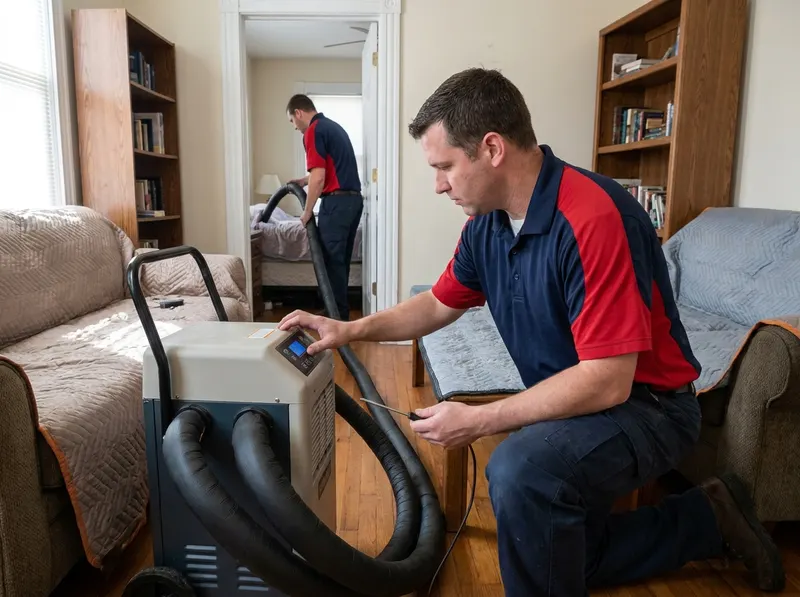
Historic architecture across Baltimore presents specific structural realities during bed bug eradications. In continuous brick rowhomes throughout Fells Point, Federal Hill, and Canton, party walls share unsealed joist pockets, tongue-and-groove subfloors, and plaster voids that allow insects to migrate between parcels. Conventional aerosol pesticide applications often fail in these settings because synthetic pyrethroids trigger sensory avoidance, driving adult insects deeper into structural cavities or adjacent dwellings. Whole-structure thermal remediation overcomes rowhouse wall voids by circulating convective dry heat through baseboards, lathe-and-plaster assemblies, and deep mattress cores simultaneously, eliminating hiding insects without pushing colonies into adjoining neighbor walls.
Achieving thermal kill requires sustaining an internal core temperature of 122°F (50°C) across all harborage zones, as biological enzymes denature irreversibly at this metric within minutes. Technicians position heavy-duty, commercial-grade convective air movers to eliminate cool air pockets behind radiators, behind decorative baseboard trim in Mount Vernon brownstones, and beneath flooring layers in Charles Village duplexes. Continuous monitoring utilizes wireless digital thermistors mapped to dense furniture centers and structural exterior walls, ensuring thermal saturation reaches the critical 130°F mark while protecting heat-sensitive household materials like wax artwork, vinyl records, and select electronics, which must be inventoried and isolated before equipment startup.
The choice between localized chemical intervention and whole-structure thermal remediation depends on infestation extent and structural continuity. While chemical residual programs cost less initially, they require multiple follow-up visits spanning 30 to 60 days, carry strict occupant preparation burdens, and struggle to penetrate uninsulated crawlspaces or multi-layer historic millwork in older Hampden and Bolton Hill homes. Thermal remediation represents a single-day structural intervention that neutralizes desiccation-resistant eggs along with mobile nymphs and adults. The procedural trade-off requires complete human and pet evacuation during the 8-hour heat cycle, along with the careful removal of pressurized canisters, aerosol cans, medications, and sensitive cosmetics before the heaters activate.
Operational steps for remediation follow an established mechanical sequence. First, technicians perform an initial thermal boundary inspection to map party walls, uninsulated floor cavities, and crawlspaces, followed by the installation of thermal barriers across common building openings to seal the target unit. Second, industrial high-output convective heaters and specialized ducting route controlled hot air into target rooms, monitored continuously via digital telemetry to prevent overheating delicate wood surfaces. Third, technicians enter the heated structure wearing protective gear at 90-minute intervals to rotate soft goods, reposition mattress components, and confirm that interior closet interiors match target readings. Fourth, the system initiates a controlled mechanical cool-down cycle, returning indoor air to ambient comfort levels so residents can reoccupy their living quarters that same evening.
Every job gets a firm, written price after a free on-site visit.
Tell us about your thermal bed bug remediation job in Baltimore and we'll send a clear, written quote, usually the same day.
 Elvaris Pest Solutions